MyNSFAS Login for South African Students 2026: Your Complete Portal Access Handbook
Navigating your higher education funding journey starts with a single, crucial step: accessing your online portal. This comprehensive MyNSFAS Login Guide for South African Students is designed to be your definitive manual for the NSFAS (National Student Financial Aid Scheme) online system.
Whether you are applying for funding for the first time, a returning student checking your status, or a parent assisting with the process, mastering your MyNSFAS login is the gateway to securing and managing your financial aid.
This matters because without successful access to your myNSFAS account, you cannot apply for funding, submit supporting documents, track your application, or receive critical updates about your allowances.
Consider this your essential guide to unlocking the full potential of NSFAS support for your studies in 2026 and beyond.
What Is the MyNSFAS Login Guide and Why It Matters
The MyNSFAS Login Guide for South African Students is a detailed, step-by-step resource that explains how to securely access, navigate, and use the official NSFAS online portal. This portal, found at www.nsfas.org.za, is the central hub for all interactions between students and the financial aid scheme.
This guide is for any South African student—from Grade 11 learners preparing for tertiary education to postgraduate students continuing their funded studies—who needs to engage with NSFAS. It is equally vital for parents, guardians, and caregivers who support applicants.
The guide covers everything from creating your myNSFAS account and completing your NSFAS application to performing a regular NSFAS status check, resetting a forgotten password, and understanding portal messages. In essence, it demystifies the digital process, ensuring you can confidently manage your funding lifecycle from application to graduation.
Who This Topic Applies To
Understanding and using the MyNSFAS login system is critical for several groups of students and stakeholders.
- First-Time Applicants: If you are in Grade 12 or have just matriculated and plan to attend a public university or TVET college in 2026, this is your starting point. You must create a profile and apply via the portal.
- Returning NSFAS Students: Students already funded by NSFAS use the same myNSFAS login to sign their Funding Agreements (NSFAS Bursary Agreement), update personal details, and check the disbursement of their allowances.
- TVET College vs. University Students: The login process is identical for both streams. However, the specific funding requirements and application pathways within the portal may have slight variations tailored to each institution type.
- SASSA Grant Beneficiaries: If you or your family are recipients of a SASSA social grant, you are automatically eligible for funding. You still need a myNSFAS account to apply, but your financial eligibility is pre-confirmed, streamlining one part of the process.
Requirements for a Successful MyNSFAS Login
Before you begin the NSFAS login process, ensure you have the following essentials ready. Having these at hand will prevent interruptions and frustrations.
- A Valid Email Address: This is non-negotiable. You must have an active, personal email address that you can access regularly. This email will be your primary username for your myNSFAS account. Do not use a school email that may deactivate after you matriculate.
- A Reliable Cellphone Number: Your South African mobile number is used for verification via One-Time Pins (OTPs). This number must be in your name or accessible to you, as it is linked to your account for security.
- A Strong Password: When creating your account, you will need to set a secure password. A strong password typically includes uppercase letters, lowercase letters, numbers, and symbols. Remember, this password is your key to accessing sensitive personal and financial information.
- Stable Internet Connection: Use a secure and stable internet connection to avoid timeouts or errors during the application or login process. A mobile data connection is sufficient if it is strong.
MyNSFAS Login Guide – Step-by-Step Process
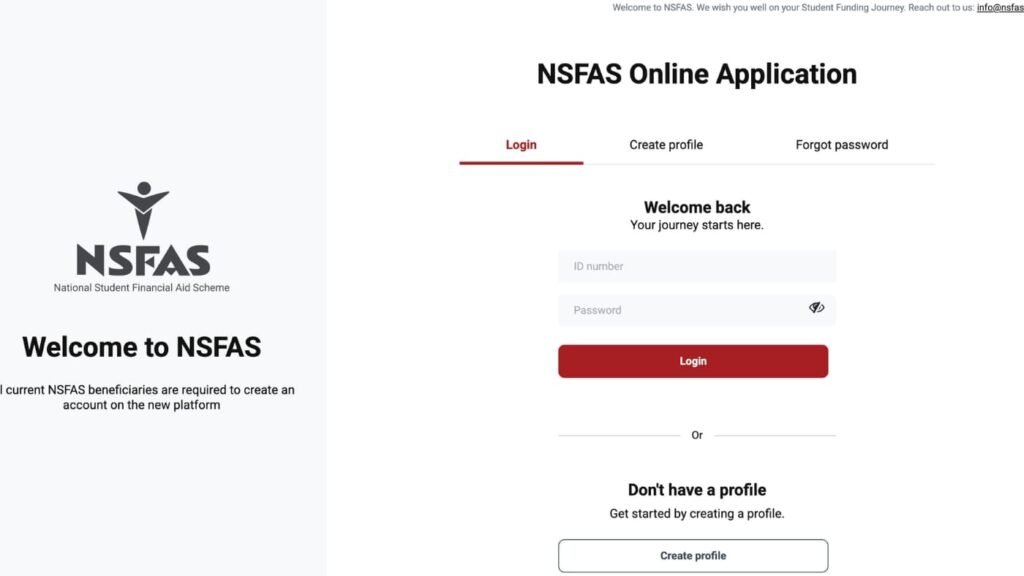
Follow these clear, numbered steps to access your myNSFAS account. Whether you are logging in for the first time or are a returning user, this process remains the same.
- Open Your Web Browser: On your smartphone, laptop, or computer, open a web browser (Chrome, Safari, Edge, etc.).
- Go to the Official NSFAS Website: In the address bar, type www.nsfas.org.za and press enter. Always double-check that you are on the official site to avoid phishing scams.
- Locate the MyNSFAS Login Button: On the NSFAS homepage, look for the ‘myNSFAS’ button or tab. It is usually prominently displayed in the top right corner of the website.
- Enter Your Login Credentials: You will be directed to the secure login page. Here, you must enter the email address you used to create your account (this is your username) and your password.
- Complete Security Verification: You may be asked to complete a security check, such as entering a One-Time Pin (OTP) sent to your registered cellphone number. This step protects your account.
- Access Your Dashboard: After successful verification, you will be logged into your personal myNSFAS account dashboard. This dashboard is your control centre for all NSFAS-related activities.
Once logged in, you can navigate to sections like ‘Apply for Funding’, ‘Check Your Application Status’, ‘Update Your Details’, or ‘Download Your Agreement’.
Documents Needed for MyNSFAS Portal Activities
While you don’t need physical documents just to log in, to complete an application or verify your details on the portal, you must have clear digital copies (PDF, JPEG) of the following. Keep them saved on your device or ready to upload from cloud storage.
- Your own South African ID document, Smart ID Card, or valid passport (for permanent residents). A birth certificate is required if you are under 16.
- The ID documents of your parents, guardians, or spouse.
- Your most recent academic results or transcripts (Grade 11 final results, Matric certificate, or latest tertiary academic record).
- Proof of income for yourself and your parents/guardians/spouse (e.g., recent payslips, employment letter, SASSA grant confirmation, or an affidavit if unemployed).
- A completed and signed Consent Form which you can download from the NSFAS website. This form gives NSFAS permission to verify your household financial information with third parties like SARS and banks.
- If you have a disability, a completed Disability Annexure A Form.
Common MyNSFAS Login Problems and Solutions
Even with preparation, you might encounter technical issues. Here are the most common MyNSFAS login problems and their practical solutions.
- Problem: “Incorrect Username or Password” Error.
- Solution: Carefully re-type your email and password, ensuring caps lock is off. If it still fails, use the ‘Forgot your password?’ link on the login page to reset it.
- Problem: Forgotten MyNSFAS Login Password.
- Solution: Click on ‘Forgot your password?’ on the login page. Enter your registered email address. NSFAS will send a password reset link to that email. Follow the instructions in the email to create a new, strong password.
- Problem: Not Receiving the One-Time Pin (OTP).
- Solution: Ensure your phone has network coverage. Wait a few minutes, as SMS delays can occur. Click ‘Resend OTP’. If it persists, verify that the cellphone number on your account profile is correct. You may need to contact NSFAS to update it.
- Problem: “Your account is locked” Message.
- Solution: Accounts are typically locked after several failed login attempts for security. Wait for 24 hours; the account often unlocks automatically. After this period, try logging in again or use the password reset function.
- Problem: The Website is Unresponsive or Slow.
- Solution: This is common during peak application periods. Try accessing the portal during off-peak hours (early morning, late evening, or weekends). Clear your browser’s cache and cookies, or try using a different browser or device.
Important Tips and Warnings for NSFAS Portal Users
- Beware of Phishing Scams: NSFAS will NEVER ask for your password or banking details via email, WhatsApp, or phone call. Only enter your login details on the official www.nsfas.org.za website. Do not click on links from unsolicited messages.
- Never Share Your Login Details: Your myNSFAS account is personal and confidential. Do not give your email, password, or OTP to anyone, including friends or individuals claiming to be “agents” who can expedite your application.
- Adhere to Deadlines Religiously: The NSFAS application window for 2026 will open and close on specific dates. Mark these dates and submit your application well in advance of the closing date to avoid last-minute system overload.
- Double-Check All Information Before Submission: The most common mistake leading to rejection or delays is incorrect or mismatched information (e.g., ID numbers typed wrongly, incorrect household income). Review every field before you click ‘submit’.
- Use Consistent Information: Use the same email address and cellphone number for the entire NSFAS process. Changing these details mid-application can cause system errors and delays in communication.
Frequently Asked Questions (FAQ)
Q: I don’t have an email address. How do I create a myNSFAS account?
A: You must create a free email address first. Services like Gmail, Outlook, or Yahoo Mail are free and easy to set up on your phone. This email will be your permanent username for NSFAS.
Q: Can I use my parent’s email and phone number for my NSFAS login?
A: It is highly recommended that you use your own personal email and a cellphone number you have constant access to. This ensures you receive all time-sensitive communication directly.
Q: How do I check my NSFAS application status after logging in?
A: Once logged into your myNSFAS account, navigate to the ‘Check Your Application Status’ tab or a similar section on your dashboard. Your current status (e.g., Submitted, Processing, Funded) will be displayed there.
Q: What should I do if I made a mistake on my submitted application?
A: Log into your portal immediately. Some sections may allow you to update information. If not, you should contact NSFAS directly through their official channels—their call centre or social media—to request guidance on correcting the error.
Q: Is the myNSFAS login the same for TVET college and university students?
A: Yes, the NSFAS login portal is a single, unified system for all applicants and beneficiaries, regardless of whether they are at a TVET college or a public university.
Q: I am a returning student. Do I need to reapply for NSFAS funding every year?
A: No, NSFAS funding is multi-year, provided you meet the academic progression requirements (passing at least 50% of your modules). You do not reapply, but you must log in annually to sign your NSFAS Bursary Agreement.
Conclusion:
Mastering your MyNSFAS login is more than just a technical step; it is the foundation of taking control of your educational future. By following this guide, you equip yourself with the knowledge to navigate the portal confidently, avoid common pitfalls, and ensure your funding journey is as smooth as possible.
Do not let anxiety around the digital process hold you back. Take a deep breath, gather your documents, and follow the steps outlined here. Remember, millions of South African students have successfully used this system to access life-changing opportunities. You can too. Log in today, take that first step, and unlock the door to your potential. Your future in higher education, supported by NSFAS, awaits on the other side of that login screen.
1. How to Login MyNSFAS Account – Complete Guide
2. How to Create myNSFAS Account Online
3. MyNSFAS Complete Guide: For Your Student Funding
4. How to Apply for NSFAS Online – Step-by-Step
5. NSFAS Provisional Funding Eligibility Requirements