
Your Complete Guide to NSFAS Provisional Funding Eligibility Requirements in 2026. For South African students, seeing the status “Provisionally Funded” in your myNSFAS account is one of the most anticipated and positive moments in the funding journey. But what does it truly mean, and what requirements must be met to get there?
This definitive guide for 2026 will demystify the NSFAS provisional funding eligibility requirements. We’ll break down exactly what this status entails, the critical criteria you must satisfy, and the clear path you need to follow to move from “provisional” to fully funded.
In essence, NSFAS provisional funding eligibility means your application has been initially successful. NSFAS has assessed you as financially and academically eligible for funding, but the final approval is contingent on you meeting a few remaining, non-negotiable conditions. It is a promise of funding that you must now secure by taking specific actions.
Understanding these requirements is crucial because it moves you from a passive applicant to an active participant in securing your future. Let’s begin.
What is NSFAS Provisional Funding Eligibility?
The NSFAS provisional funding eligibility status is a pivotal milestone. It is not the final funding approval, but it is the strongest indicator that you are on the right track.
When your status changes to “Provisionally Funded,” it signals that:
- Your household financial means-test has been passed.
- You have been provisionally admitted to a public university or TVET college.
- Your chosen qualification is on the NSFAS list of funded programmes.
- There are no outstanding document issues with your application.
Why This Status Matters Immensely to You:
This status matters because it is your green light to proceed with confidence. It means NSFAS has essentially said, “We intend to fund you, provided you finalise the last steps.” It shifts your focus from whether you will be funded to ensuring you meet the final conditions to activate that funding.
What “Provisionally Funded” Means Financially:
It is a commitment from NSFAS to cover your core study costs, pending final conditions. This includes:
- Tuition and registration fees paid directly to your institution.
- Allowances for learning materials, personal care, accommodation, and transport.
- However, these funds will only be released after all provisional conditions are met and you sign your NSFAS Bursary Agreement (NBA).
Who This Topic Applies To
The journey to provisional funding eligibility applies to a broad spectrum of students. If you are in one of these categories, this guide is your roadmap.
- First-Time Applicants (Matriculants & New Entrants): This is your first application for tertiary funding. You must meet all basic eligibility criteria to be considered for provisional status.
- Returning NSFAS Students: Even if funded previously, you must demonstrate continued eligibility each year. Your academic performance from the previous year is a key factor in regaining provisional funding status for 2026.
- TVET College vs. University Students: The core financial eligibility is identical. The difference may lie in the specific qualification approval and the institution’s data submission to NSFAS.
- SASSA Grant Beneficiaries: While you are automatically financially eligible, you must still meet all other provisional requirements: admission to an approved institution and an approved qualification.
Main NSFAS Requirements for Provisional Eligibility
To reach the “Provisionally Funded” stage, you must first satisfy NSFAS’s fundamental eligibility criteria. These are the non-negotiable foundations.
Citizenship and Residency
- You must be a South African citizen or permanent resident.
- You must be studying or intend to study at a public TVET college or university.
Household Income Thresholds
Your combined household gross income must fall below these ceilings:
- For Dependent Students (reliant on parents/guardians): Must not exceed R350,000 per annum.
- For Independent Students (self-supporting, usually over 30): Must not exceed R600,000 per annum.
- SASSA Grant Recipients: Automatically qualify for the financial means test.
Academic Requirements
- First-Time Entering Students (FTEN): You must have a valid Grade 12 (Matric) certificate and a provisional admission offer from an institution.
- Returning Students: You must meet the NSFAS Academic Performance Policy (N+ rule). You are funded for the prescribed time of your qualification (N) plus one additional year of support (N+1). If you have exceeded this, you lose eligibility.
Special Cases
- Students with Disabilities: Have a higher household income threshold (R600,000 p.a.) and must submit a completed Disability Annexure A form.
- Orphans: Must provide relevant documentation (death certificates, court orders, or letters from recognised organisations).
Step-by-Step Process to Achieving NSFAS Provisional Funding
The path to “Provisionally Funded” is a sequential journey. Here is your step-by-step guide.
Step 1: Submit an Accurate and Complete Application
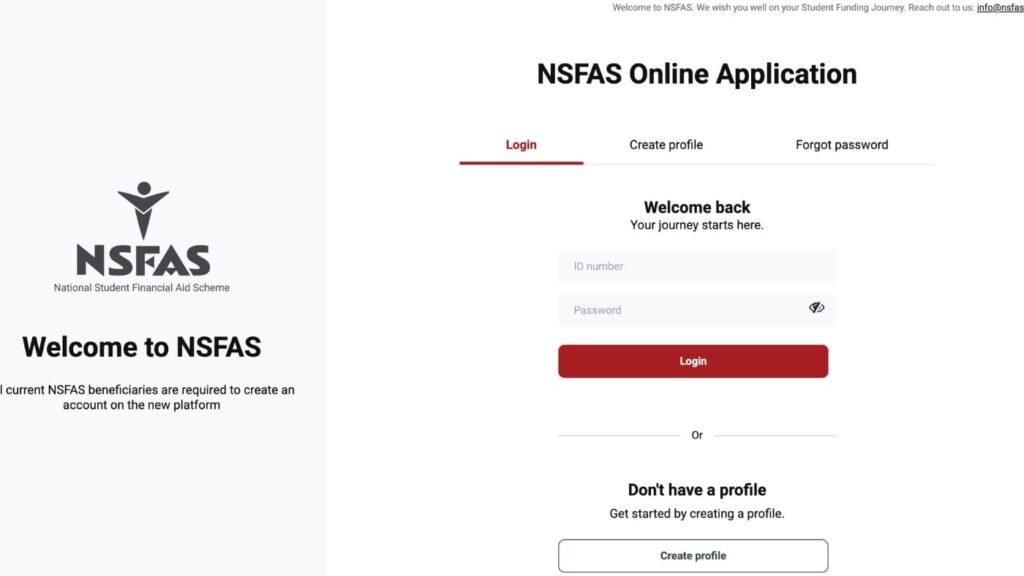
Apply on the official NSFAS website or myNSFAS portal within the opening window for 2026 applications. Every detail must match your official documents (ID, names, etc.).
Step 2: Secure Provisional Admission
While NSFAS assesses your finances, you must apply to and receive a provisional admission offer from a public university or TVET college for a NSFAS-approved qualification.
Step 3: Application Evaluation & “Waiting Evaluation”
NSFAS verifies your documents and income. Your status will move through stages like “Filtering” and “Waiting Evaluation.”
Step 4: Financial & Academic Eligibility Check
NSFAS confirms your household income is within the threshold and, for returning students, that you are within the N+ rule.
Step 5: Status Change to “Provisionally Funded”
Once NSFAS confirms your financial eligibility and receives data from your institution confirming your provisional admission, your status updates. This is the key moment.
Step 6: Fulfil the Final Conditions
Provisional status comes with final requirements:
- Firm Admission: You must register formally for your course.
- Sign the NSFAS Bursary Agreement (NBA): This is a legally binding contract on the myNSFAS portal.
- Institutional Confirmation: Your institution must confirm your registration with NSFAS.
Step 7: Receive “Approved” Status and Allowances
Once all conditions are met, your status changes to “Approved,” and allowances are processed.
Documents Needed for a Successful NSFAS Application
Having the correct, certified documents is what moves your application smoothly toward provisional eligibility.
Mandatory Document Checklist:
- South African ID Document, Smart Card, or Birth Certificate: A clear, certified copy.
- Parents/Guardian/Spouse ID Documents: Certified copies of IDs for all income contributors in your household.
- Proof of Income: Latest payslips (not older than 3 months), employment letters, or sworn affidavits if unemployed. SASSA grant recipients do not need this.
- Consent Form: The NSFAS Declaration and Consent Form, signed by all parties whose income was declared.
- Academic Records: Your Grade 12 certificate or latest academic transcript/record (for returning students).
- Disability Annexure A Form: If applicable, completed by a qualified medical professional.
Certification Rules
- All copies must be certified as true copies of the original.
- Certification must be recent (typically within the last 3-6 months).
- A commissioner of oaths, police officer, or post office official can certify.
- The stamp must be clear and include the certifier’s contact details.
Upload Tips
- Scan documents in good lighting.
- Save files as PDF or JPEG.
- Ensure file sizes are within the portal’s limit (usually under 2MB).
- Label files clearly (e.g., “JohnDoe_ID_Certified”).
Common NSFAS Application Problems and Solutions
Problem 1: Status Stuck on “Funding Eligibility” or “Awaiting Admission”
- Solution: This often means NSFAS has approved you financially but is waiting for your institution to confirm your admission/registration. Contact your university’s financial aid office immediately to ensure they have uploaded your data to the NSFAS system.
Problem 2: Provisional Funding Revoked or Changed to “Unsuccessful”
- Solution: This can happen if your final matric results don’t meet your institution’s admission criteria, or if your institution’s data shows you are not registered. Check the reason on your portal. You may need to appeal or urgently contact your institution’s admissions department.
Problem 3: Unable to Sign the NSFAS Bursary Agreement (NBA)
- Solution: Ensure you are using a compatible browser (Chrome or Firefox). Clear your cache. If the NBA does not appear, it may be because your institution has not yet confirmed your registration. Follow up with them.
Problem 4: Missing Allowances Despite “Approved” Status
- Solution: First, confirm with your institution that they have processed the allowances. Then, ensure your personal banking details are correct on the myNSFAS portal. Allowances are often paid through the institution, not directly by NSFAS.
Important Tips and Warnings for NSFAS Application
- SCAM ALERT: NSFAS will never ask for your password, OTP, or payment to process your funding. All communication comes from @nsfas.org.za or @myNSFAS.co.za domains. Do not share personal details with “agents.”
- The Critical Deadline Trio: You have three deadlines: 1) NSFAS application deadline, 2) Institution application deadline, 3) NSFAS appeal deadline if rejected. Missing any can cost you your funding.
- Mistakes That Cause Rejection: Incorrect income figures, uncertified documents, applying for a non-funded qualification (e.g., a second undergraduate degree, certain short courses), or exceeding the N+ rule.
- Communication is Key: Use the official NSFAS channels: WhatsApp (078 519 8006), USSD line (12067327#), email (info@nsfas.org.za), and the myNSFAS portal support function.
Frequently Asked Questions (FAQ)
Q1: Is “Provisionally Funded” a guarantee of payment?
A: No, it is a conditional guarantee. You must still register and sign your NSFAS Bursary Agreement (NBA) to receive the funds.
Q2: How long does “NSFAS Provisionally Funded” status last?
A: It lasts until registration closes for your academic year. If you do not register and sign the NBA in time, the provisional funding will lapse.
Q3: I am “Provisionally Funded” but my institution is asking for registration fees. What should I do
A: Contact your institution’s financial aid office immediately. They should have a process for NSFAS students to register without upfront payment, often called a “NSFAS Debt Agreement.”
Q4: Can I change my institution or course if I am “Provisionally Funded”?
A: This is very risky and can invalidate your funding. You must immediately update your application on the myNSFAS portal and ensure your new institution and course are NSFAS-approved. Contact NSFAS directly for guidance before making any changes.
Q5: What happens if I fail the academic year while on provisional funding?
A: For returning students, passing a certain percentage of your modules is a condition for continued funding. Failing may affect your eligibility for the following year under the N+ rule.
Conclusion:
Achieving NSFAS provisional funding eligibility is a significant victory that reflects your diligence in meeting the initial requirements. It is a testament to your potential and a crucial investment in your future by the South African government.
Do not see this status as the finish line, but as the final stretch. Your actions now—registering on time, signing your contract, and communicating with your institution—are what will unlock the actual funding.
Stay proactive, stay informed through official channels, and meet every deadline with precision. The opportunity to transform your life through education is within reach. Take hold of it, fulfil the final requirements, and step confidently into your 2026 academic year. Your future is waiting.
1. What is “NSFAS Waiting Evaluation”? – Complete Guide
2. What Does NSFAS Status Processing Mean?
3. How to Track NSFAS Application Online
4. How to Check NSFAS Status Online – A Complete Guide
5. How to Apply for NSFAS Online Step-by-Step