NSFAS South Africa student funding eligibility criteria: Navigating the path to tertiary education in South Africa often hinges on one crucial question: “Do I qualify for financial aid?” Understanding your NSFAS South Africa student funding eligibility is the definitive first step to unlocking the support you need. The National Student Financial Aid Scheme (NSFAS) is a government bursary designed to remove financial barriers for students from poor and working-class backgrounds.
This complete 2026 guide matters to you because a clear grasp of the eligibility criteria, requirements, and process can determine whether you secure full funding for your diploma or degree. Misunderstanding the rules is a common reason for application rejection. We’ve created this authoritative resource to walk you through every detail, from basic requirements to complex scenarios, empowering you to apply with confidence.
What Is NSFAS and Why It Matters
NSFAS is more than just a loan; it’s a comprehensive bursary scheme funded by the South African government. Its core mission is to provide students from financially disadvantaged households with the means to access and succeed in public universities and TVET colleges.
If you meet the NSFAS funding eligibility criteria, the scheme covers a significant portion of your educational costs. This financial support is crucial because it allows you to focus on your studies without the constant stress of how to pay for registration, accommodation, or textbooks.
Who NSFAS South Africa Student Funding Eligibility Is For
This funding is specifically designed for South African students who demonstrate academic potential but lack the financial means to pursue higher education. It targets households with a combined annual income that falls below a specific threshold, ensuring support reaches those who need it most.
What NSFAS Covers Financially
For successful applicants, NSFAS provides comprehensive funding that includes:
- Tuition Fees: Paid directly to your registered institution.
- Learning Materials: An allowance for books, stationery, and other required resources.
- Accommodation: Covered either for university-managed residence or private accommodation (capped at relevant institutional rates).
- Living Allowance: A personal care stipend for food and daily essentials.
- Transport Allowance: For students who do not reside in accredited accommodation.
This package is designed to be a full-cost bursary, meaning if you qualify and maintain academic performance, you do not have to repay the funds.
Who This Topic Applies To
Whether you’re in Grade 12 planning your next move or already enrolled and struggling with fees, understanding NSFAS South Africa student funding eligibility is essential.
First-Time Applicants (Grade 12 & First-Years)
This is your primary guide. If you are applying to a public university or TVET college for the first time and your family income is limited, you are the core intended beneficiary of NSFAS. You must apply for funding and a place at your chosen institution simultaneously.
Returning Students Seeking Funding
If you are already enrolled but were previously self-funded or funded through other means, and your financial circumstances have changed, you can apply. You must also meet the NSFAS academic progression policy (N+ rule) to continue receiving funding.
TVET College vs. University Students
NSFAS funds both pathways. The NSFAS funding eligibility core criteria are similar, but some administrative processes and allowable qualifications differ. TVET students must be enrolled in NC(V) or Report 191 programmes.
SASSA Grant Beneficiaries
If you are a recipient of a South African Social Security Agency (SASSA) grant, you automatically meet the financial eligibility criteria. However, you must still complete the application process and meet all other academic and citizenship requirements.
NSFAS Eligibility Requirements for 2026
This is the most critical section. Your NSFAS South Africa student funding eligibility is determined by a set of non-negotiable criteria. You must meet ALL of the following:
Citizenship
- You must be a South African citizen.
- A valid South African ID document or card is mandatory.
Household Income Thresholds
This is the primary financial test. The combined gross annual income of your parents or guardians (or your spouse, if married) must not exceed:
- R350,000 per annum for applicants whose parents are alive.
- R600,000 per annum for applicants with a disability (supported by a SASSA or medical assessment letter).
Academic Requirements
- First-Time University Students: You must have passed Grade 12 (Matric) and been accepted or be applying to a public university for an approved qualification.
- First-Time TVET Students: You must have passed Grade 9 or higher and been accepted or be applying for an approved TVET college programme.
- Returning Students: You must demonstrate academic progress as per your institution’s policy and the NSFAS N+ rule. The “N” is the minimum number of years allocated for your qualification, plus one extra year.
Special Cases and Supporting Documentation
- Students with Disabilities: Must provide a completed and signed Disability Annexure A form.
- Orphans/Vulnerable Children: Must be verified by the Department of Social Development.
- Other Dependents: If you have children or other dependents you support, relevant documentation may strengthen your application’s context.
Step-by-Step Process for Applying and Securing Funding
Follow this clear, numbered process to navigate your NSFAS application successfully.
Step 1: Prepare Before the Application Opens
Gather all necessary documents (see next section). Have certified copies ready. Discuss household finances with your parents/guardians to accurately report income.
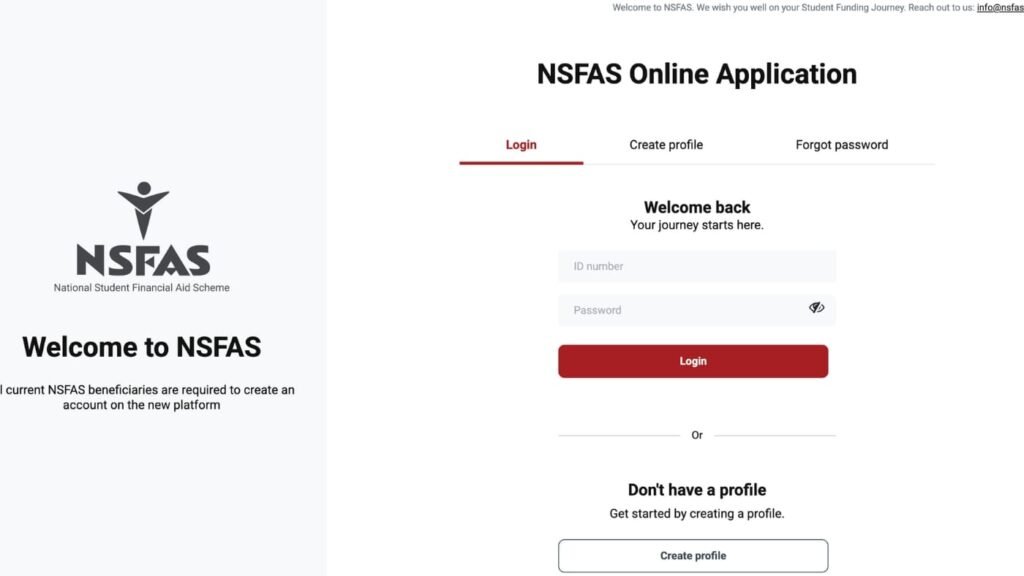
Step 2: Create Your myNSFAS Account
- Visit the official NSFAS website: www.nsfas.org.za
- Click on ‘myNSFAS’ and register.
- You will need your ID number, cellphone number, and email address.
- Do not use a school or tertiary email. Use a personal Gmail or similar that you will have long-term access to.
Step 3: Complete the Online Application
- Log into your myNSFAS account.
- Click ‘Apply’ when applications are open.
- Fill in every field accurately. Double-check all ID numbers, names (must match ID), and income figures.
- Consent to NSFAS verifying your information with third parties (SARS, SASSA, etc.).
Step 4: Upload Supporting Documents
- Upload clear, certified copies of all required documents in the specified formats (PDF, JPEG).
- Ensure files are not blurry, cropped, or password-protected.
Step 5: Submit and Note Your Reference Number
- Submit your application. You will receive a reference number.
- Save this number and take a screenshot of the confirmation page for your records.
Step 6: Regularly Check Your Application Status
- Log into your myNSFAS account regularly to track your NSFAS status check.
- Statuses include: Application Submitted, Filtering, Evaluation, Funding Eligibility, Awaiting Admission, Approved, and Payment.
Documents Needed for Your NSFAS Application
Missing or incorrect documents are a top reason for delays and rejections. Have these ready:
- Certified copy of your South African ID. Certification must be recent (not older than 3 months).
- Certified copy of your parent’s/guardian’s/spouse’s ID.
- Proof of Income: If employed, latest payslips (not older than 3 months) or a letter from employer. If unemployed, a sworn affidavit.
- Consent Form: Downloaded from the NSFAS website, completed and signed by all parties whose income is declared.
- If applicable: A SASSA grant affidavit, Disability Annexure A Form, Death Certificate(s) of parent(s), or a Vulnerable Child Declaration Form.
Certification Rules
Documents must be certified by a Commissioner of Oaths (at a police station, post office, or lawyer). The certifier must write “Certified true copy of original,” sign, date, and provide their full name and contact details.
File Formats and Upload Tips
- Scan documents clearly or use a high-quality smartphone camera scanner app.
- Save files as PDF or JPEG.
- Ensure the file size is within NSFAS limits (typically under 2MB).
- Name your files clearly (e.g., “JacobZuma_ID_Certified.pdf”).
Common Problems and Solutions
Even with perfect NSFAS South Africa student funding eligibility, technical and process hiccups can occur.
Problem 1: “Invalid ID” or “ID Already Exists” Error
- Solution: You may have registered before. Use the ‘Forgot Password’ feature on the myNSFAS portal. If problems persist, contact NSFAS via their social media or call centre with your ID ready.
Problem 2: Application Rejected Due to “Household Income Exceeds Threshold”
- Solution: First, double-check the figures you submitted. If you believe it’s an error, you can appeal during the official appeal period. You will need to provide further proof of income.
Problem 3: Missing Documents or Application Stuck on “Filtering”
- Solution: Log into your myNSFAS account, go to ‘Track Application History,’ and check for messages. You may have a notification to upload missing documents. Do so immediately.
Problem 4: Approved for Funding but Not Registered
- Solution: Your status will show “Awaiting Registration.” NSFAS cannot pay until your institution confirms your registration for an approved course. Ensure you have formally accepted your academic offer and registered.
Problem 5: Delays in Allowance Payments
- Solution: First, confirm with your institution’s financial aid office that they have submitted the registration data to NSFAS. Allowances are often disbursed through the institution, not directly from NSFAS.
Important Tips and Warnings
Avoiding Scams
- NSFAS will NEVER ask you for your myNSFAS password or OTP.
- They will never call you to request payment for an application.
- Only use www.nsfas.org.za and its official social media pages (blue tick verified).
- Do not pay anyone to “help” you apply. The application is free.
Deadlines to Watch
- The application period typically opens around September and closes in January. DO NOT WAIT FOR YOUR MATRIC RESULTS. Apply as soon as applications open.
- Appeal periods are strict and usually open for a limited time after application results are released.
Mistakes That Lead to Rejection
- Incorrect Personal Details: Names, ID numbers, and contact details that don’t match your official documents.
- Incomplete Applications: Leaving sections blank.
- Uncertified or Unclear Documents.
- Missing the Deadline: Late applications are generally not accepted.
Frequently Asked Questions (FAQ)
Who qualifies for NSFAS 2026?
You qualify if you are a South African citizen, have a combined household income under R350,000 per year (or R600,000 if disabled), and are accepted or registered at a public TVET college or university.
How do I check my NSFAS status?
Log into your myNSFAS account on the official website and click ‘Track Application Progress.’ This is the only official portal for a reliable NSFAS status check.
Can I apply for NSFAS if I failed a module?
Yes, but you must meet the NSFAS N+ rule for academic progression. You have N (minimum years of your programme) + 1 additional year to complete it. If you exceed this, you lose funding.
What if my parents are unemployed?
You will need to provide a sworn affidavit stating they are unemployed and have no income, or provide their SASSA grant confirmation if applicable.
Does NSFAS fund postgraduate studies?
Generally, NSFAS funding for postgraduate studies (e.g., Honours) is extremely limited and often specific to certain critical skills. The primary focus is on first undergraduate qualifications.
How long does NSFAS funding last?
Funding is provided for the official duration of your qualification, plus one additional year (the N+ rule), provided you pass your modules each year.
Can I change my banking details on myNSFAS?
Yes, you can update your banking details in your myNSFAS account. However, after approval, allowances are often paid via a NSFAS wallet system or directly through your institution.
Conclusion:
Understanding and meeting the NSFAS South Africa student funding eligibility requirements is your gateway to achieving your educational dreams without the burden of debt. The process may seem detailed, but taking it step-by-step with this guide makes it manageable.
Start preparing your documents today. When applications open, act promptly, apply accurately, and monitor your myNSFAS account diligently. Remember, millions of students have successfully walked this path before you. Your focus, diligence, and commitment to providing accurate information are the keys to unlocking this vital support.
Your education is an investment in yourself and the future of South Africa. Take charge of the process, believe in your potential, and take that first confident step towards applying. Good luck.
See also:
1. How to Apply for NSFAS Online
2. How to Track NSFAS Application Online
3. How to create mynsfas account online
4. How to Check NSFAS Status – (Know Your NSFAS Status Now)