
How to Appeal NSFAS Application: Your Complete 2026 Step-by-Step Guide. Seeing “Unsuccessful” or “Rejected” on your NSFAS application status is a heart-dropping moment, but it is not the end of the road. Understanding how to appeal NSFAS application decisions is a crucial skill for any South African student.
The National Student Financial Aid Scheme (NSFAS) has a formal appeals process, and navigating it correctly can turn a rejection into funding. This complete 2026 guide will walk you through every single step, document, and strategy you need. Why does this matter?
Because a well-prepared appeal is your only chance to secure the financial support you need to pursue your studies. Let’s turn that “No” into a “Yes.”
What is a NSFAS Appeal Application and Why It Matters
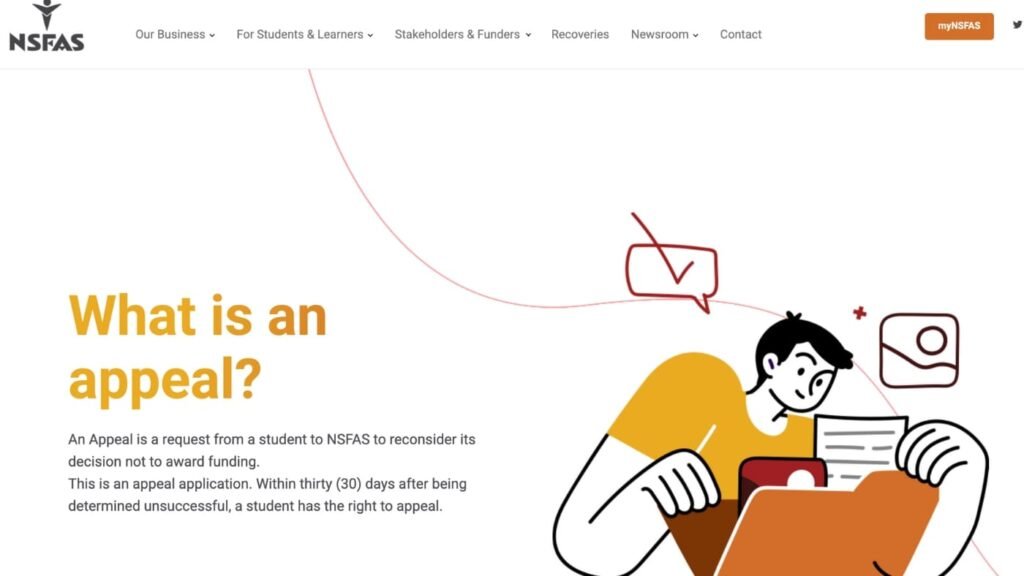
A NSFAS appeal application is a formal request for the scheme to review a decision to deny you funding. It is your opportunity to present new information, clarify misunderstandings, or prove that your circumstances align with their policies.
This process exists because initial applications can be declined for various reasons—sometimes due to simple errors, missing documents, or a change in your family’s financial situation. The appeal is your legal right to a second look.
- Who This Appeal Application Is For: Any student—first-time applicant or returning—who has received an official rejection or funding withdrawal notification from NSFAS.
- What a Successful Appeal Covers: If approved, your funding is reinstated or granted. This includes full coverage of registration and tuition fees, plus allowances for learning materials, accommodation, transport, and personal care.
Who This Topic Applies To
This guide is essential for:
- First-Time Applicants: Whose initial application for funding was rejected.
- Returning Students: Whose existing NSFAS funding was withdrawn due to academic performance (failing to pass 50%+ of modules) or exceeding the N+ rule timeframe.
- TVET College and University Students: The appeal process is fundamentally the same for students at both types of public institutions.
- SASSA Grant Beneficiaries: Even if you qualify automatically financially, you may need to appeal on academic grounds if your funding is stopped.
- Students with Changed Circumstances: Those whose household income has dropped significantly since their initial application.
Requirements and Eligibility to Submit a NSFAS Appeal Application
You cannot appeal just because you are unhappy. You must have valid grounds. NSFAS will only consider appeals based on specific criteria.
1. Valid Grounds for Appeal:
- Financial Ineligibility: Your household income was incorrectly assessed as above the threshold (R350,000 pa, or R600,000 for students with disabilities).
- Change in Financial Circumstances: A breadwinner lost their job, passed away, or your family’s income dropped significantly after you applied.
- Academic Eligibility: Your funding was stopped for poor academic performance, but you had extenuating circumstances (medical, bereavement, trauma).
- Missing or Incorrect Information: You are an orphan, child of a military veteran, or person with a disability, but this was not captured in your original application.
2. General Eligibility to Lodge an Appeal:
- You must be a South African citizen or permanent resident.
- You must have received a formal rejection/withdrawal notification.
- You must submit the appeal only during the official, announced appeals window on the myNSFAS portal.
How to Appeal NSFAS Application – Step-by-Step Process of
Follow these steps in order. Do not skip any.
Step 1: Wait for the Official Communication
Do not panic. Wait for the official NSFAS rejection or withdrawal notification via your myNSFAS portal and registered email. This confirms your status and often includes initial reasons.
Step 2: Gather Your Evidence and Documents
Before you even log in, collect all the supporting documents for your appeal reason (see full list in the next section). This is the most important preparation step.
Step 3: Log into Your myNSFAS Account
Go to the official NSFAS website and access the Student Portal. This is the only platform for a valid appeal.
Step 4: Locate and Click the “Submit Appeal” Button
During the open appeal period, this button will appear on your dashboard next to your application status. Click it to start the process.
Step 5: Choose Your Appeal Reason
You will be given a dropdown menu. Select the reason that exactly matches your case (e.g., “Financial Circumstances,” “Academic Eligibility”).
Step 6: Complete the Appeal Form
Fill in every required field in the online appeal form. Be clear, concise, and factual. Explain your situation without emotional language.
Step 7: Upload Your Supporting Documents
Attach your prepared documents. The portal will have specific fields (e.g., “Proof of Income,” “Academic Letter”). Upload the correct document to the correct field. Ensure each file is clear and certified where required.
Step 8: Review and Final Submission
Double-check everything. Are all fields complete? Are all documents attached and clear? Once satisfied, submit your appeal. Write down your appeal reference number.
Step 9: Track Your Appeal Status
Regularly log back into your myNSFAS account to check your status. It will move from “Appeal Submitted” to “Appeal Under Review” and finally to a decision.
Documents Needed for a NSFAS Appeal Application
Your documents are your proof. Here is the complete checklist.
For ALL Appeals:
- A certified copy of your South African ID (not older than 3 months).
- A completed NSFAS Appeal Affidavit or the online appeal form.
For Financial Eligibility Appeals:
- Proof of Loss of Income: Retrenchment letter, sworn affidavit from employer, death certificate.
- Updated Proof of Household Income: Latest payslips (less than 3 months old), sworn affidavits if unemployed, SASSA grant confirmation.
- Proof of Changed Circumstances: Divorce decree, court order.
For Academic Eligibility Appeals:
- Official Academic Transcript/Record: From your institution’s registrar.
- Academic Support/Improvement Plan Letter: This is critical. It must be an official letter from your faculty, lecturer, or student support unit. It must:
- State they are aware of your previous results.
- Explain the cause (medical, personal issues).
- Detail a signed, concrete plan for your academic recovery.
- Evidence of Extenuating Circumstances:
- Medical: Doctor’s letter/hospital records.
- Bereavement: Death certificate.
- Other: Police report, social worker’s letter.
For Special Category Appeals:
- Disability: A completed and stamped Annexure A form from a medical professional.
- Orphaned Students: Death certificates of both parents.
- Military Veterans: Proof from the Department of Military Veterans.
File Formats & Upload Tips:
- Formats: PDF, JPEG, or PNG. Use PDF for multi-page documents.
- Scan Quality: Scan in colour. Ensure all text, stamps, and signatures are clear and uncropped.
- File Naming:
LastName_DocType_Appeal.pdf(e.g.,Mokoena_ID_Appeal.pdf). - Certification: Get black-and-white copies stamped and signed by a Commissioner of Oaths at a police station or post office.
Common Problems and Solutions with NSFAS Appeal Applications
- Problem: “The Submit Appeal button is not showing on my portal.”
- Solution: This means the appeals window is not yet open or has closed. Wait for the official NSFAS announcement. If you believe it should be open, clear your browser cache or try a different browser (Chrome is best).
- Problem: “I uploaded my documents but my status hasn’t changed from ‘Appeal Submitted’ for weeks.”
- Solution: The review process is slow, taking weeks or months. This is normal. Continue checking weekly. Only contact NSFAS if it has been an exceptionally long time (e.g., well into the academic year).
- Problem: “My appeal was rejected. What now?”
- Solution: First, check the reason on your portal. If a new appeals window opens, you can appeal again with new and stronger evidence. Immediately visit your institution’s Financial Aid Office (FAO) to discuss payment plans, emergency loans, or other bursaries.
- Problem: “The portal gives an error when I try to upload my files.”
- Solution: Ensure your files are not too large (compress PDFs if needed). Try using a different device or internet connection. Submit during off-peak hours (early morning or late evening).
Important Tips and Warnings
- Avoid Scams: NSFAS will NEVER ask you to send appeal documents via email, WhatsApp, or Facebook. All communication must be through your myNSFAS account. Anyone asking for money to “fast-track” your appeal is a fraudster.
- Deadlines Are Everything: The appeals window is strictly limited, often to 30 days. The moment it opens, start your process. Do not wait for the last day—technical glitches are common.
- Top Mistakes That Cause Rejection:
- Submitting uncertified ID copies.
- Providing a generic, non-specific academic letter without a recovery plan.
- Uploading blurry or incomplete documents.
- Appealing without valid grounds or new evidence.
- Missing the appeals window entirely.
- Register While You Appeal: To be funded, you must be registered. Engage with your university/TVET college’s FAO about a possible fee concession while your appeal is pending, to avoid losing your place.
Frequently Asked Questions (FAQ)
Q1: How long does the NSFAS appeal decision take?
A: It can take from several weeks to several months. You must be patient but vigilant. Continue checking your myNSFAS portal for updates.
Q2: Can I submit a physical paper appeal?
A: No. The only accepted method for the 2026 cycle is the online appeal via your myNSFAS account.
Q3: What if my parents are unemployed and have no payslips?
A: You must submit sworn affidavits from both parents/guardians declaring their unemployment and lack of income, certified by a Commissioner of Oaths.
Q4: I failed due to sickness but have no doctor’s letter. What can I do?
A: A doctor’s letter is the strongest evidence. If impossible, a sworn affidavit detailing the illness, supported by any evidence you have (medicine receipts, testimonies), is better than nothing. Focus on getting a strong academic support letter.
Q5: Can I appeal more than once?
A: You can typically only appeal once per application cycle. If rejected, you must wait for a new window (e.g., the next academic year) and submit a fresh appeal with new information.
Conclusion:
Learning how to appeal NSFhttps://www.nsfas.org.za/content/appeals.htmlAS application decisions is about taking control of your future. A rejection is a setback, not a full stop. This process demands diligence, attention to detail, and patience.
Start preparing your documents the moment you consider an appeal. Be honest, thorough, and proactive. Use this guide as your roadmap, follow each step carefully, and present the strongest possible case to the appeals committee.
Your education is worth the effort. Don’t give up after the first “no.” A successful appeal can change your entire academic trajectory. Take a deep breath, get organised, and fight for the funding you deserve. You can do this.
1. NSFAS Appeal Required Documents
2. How to Apply for NSFAS Online (Step-by-Step)
3. What is “NSFAS Waiting Evaluation”? – Complete Guide
4. What Does NSFAS Status Processing Mean?
5. Does NSFAS Fund Someone Who Is Repeating Grade or Module?