Applying for NSFAS online is one of the most important steps for South African students who need financial support to study at a public university or TVET college. The National Student Financial Aid Scheme (NSFAS) provides funding to eligible students from poor and working-class households, covering essential study costs that would otherwise make higher education inaccessible.
This guide explains how to apply for NSFAS online step by step, what you need before you start, common mistakes to avoid, and what to do after submitting your application. Whether you are a first-time applicant, a returning student, or a parent helping a learner, this article is designed to give you clear, accurate, and practical guidance.
What Is NSFAS and Why It Matters
The National Student Financial Aid Scheme (NSFAS) is a government bursary programme under the Department of Higher Education and Training. Its purpose is to help students from disadvantaged backgrounds access higher education at public institutions.
NSFAS matters because it removes the biggest barrier to studying further: money. For many households, paying university or TVET college fees is simply not possible without assistance.
Who NSFAS Is For
NSFAS is intended for:
- South African citizens and permanent residents
- Students studying or planning to study at public universities
- Students studying at public TVET colleges
- Students from households earning R350,000 or less per year
- SASSA grant beneficiaries who meet academic requirements
What NSFAS Covers Financially
If approved, NSFAS funding can cover:
- Tuition fees paid directly to the institution
- Accommodation (subject to limits and accreditation)
- Study materials and textbooks
- Living allowances
- Transport allowances (for qualifying students)
Because NSFAS funding is comprehensive, applying correctly and on time is critical.
Who This Topic Applies To
Understanding whether this guide applies to you helps avoid confusion and wasted effort.
First-Time NSFAS Applicants
If you have never applied for NSFAS before, this guide walks you through the entire process from creating a myNSFAS account to submitting your first application.
Returning NSFAS Applicants
Students who have applied in previous years may still need to apply again, depending on their funding status and academic progression. Returning students must ensure their details are updated and applications submitted during the open period.
TVET College vs University Students
Both TVET college students and university students can apply for NSFAS, but:
- TVET students may have additional academic requirements
- Allowances and accommodation rules may differ slightly
- Registration and verification processes may vary by institution
SASSA Grant Beneficiaries
Students receiving SASSA grants are financially pre-qualified for NSFAS. However, they must still:
- Apply online
- Meet academic requirements
- Be accepted or registered at a public institution
Requirements and Eligibility
Before applying for NSFAS online, it is important to confirm that you meet the eligibility criteria.
Citizenship Requirements
You must be:
- A South African citizen, or
- A permanent resident of South Africa
Asylum seekers and international students do not qualify for NSFAS funding.
Household Income Thresholds
Your combined household income must be:
- R350,000 or less per year, or
- R600,000 or less per year if you have a registered disability
SASSA grant beneficiaries automatically meet the financial requirement.
Academic Requirements
Academic eligibility depends on your level of study:
- First-time university students must meet minimum entry requirements
- Returning students must show academic progression
- TVET students must be enrolled in approved programmes
Failing too many modules or not meeting progression rules can affect future funding.
Special Cases
NSFAS makes provision for:
- Students with disabilities
- Orphans and vulnerable children
- Students from child-headed households
Additional supporting documents may be required in these cases.
How to Apply for NSFAS Online 2026: Step-by-Step Process
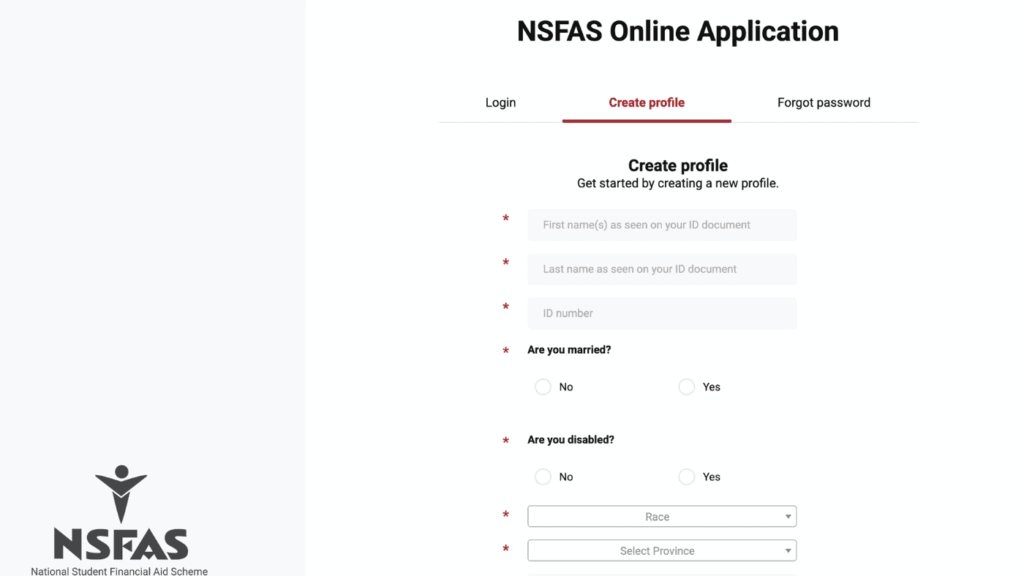
This is the most important section of the guide. Follow each step carefully to avoid delays or rejection.
Step 1: Create a myNSFAS Account
To apply for NSFAS online, you must first register on the NSFAS portal.
You will need:
- Your South African ID number
- A valid email address
- An active cellphone number
Create a strong password and keep your login details safe, as you will use them to track your NSFAS application and status.
Step 2: Log In to Your myNSFAS Account
Once registered, log in using your username and password. This dashboard is where you will:
- Start your NSFAS application
- Upload documents
- Track application progress
- Receive NSFAS notifications
Step 3: Start a New NSFAS Application
After logging in:
- Select the option to apply for funding
- Read the instructions carefully before proceeding
Do not rush this step, as errors can affect your outcome.
Step 4: Complete Personal Information
You will be required to confirm or complete:
- Full names and surname (as per ID)
- Date of birth
- Gender
- Contact details
Ensure all details match your official documents exactly.
Step 5: Provide Academic Information
Enter details about:
- Your current school or institution
- Your intended or current institution of study
- Your qualification or programme
Incorrect academic information is a common reason for delays.
Step 6: Enter Household and Financial Details
NSFAS uses this information to assess eligibility. You may need to provide:
- Parent or guardian details
- Household income information
- SASSA status (if applicable)
Be honest and accurate. NSFAS verifies information with other government departments.
Step 7: Upload Supporting Documents
Upload all required documents in the correct format. Missing or unclear documents can cause your application to be rejected or delayed.
Step 8: Submit Your NSFAS Application
Before submitting:
- Review all information
- Confirm documents are uploaded correctly
Once submitted, you will receive confirmation that your NSFAS application is under review.
Documents Needed for NSFAS Application
Uploading correct and clear documents is essential for a successful NSFAS application.
Required Documents
Commonly required documents include:
- Certified copy of your South African ID
- Certified copy of parent or guardian ID
- Proof of income or affidavit if unemployed
- SASSA grant letter (if applicable)
- Signed NSFAS consent form
- Proof of disability (if applicable)
- Death certificate(s) if parents are deceased
Certification Rules
- Documents must be certified
- Certification should not be older than three months
- Stamps and signatures must be clear and readable
File Formats and Upload Tips
- Accepted formats usually include PDF, JPG, and PNG
- Files should be clear, not blurry
- Ensure documents are not cut off
- Upload each document in the correct category
Common Problems and Solutions
Many students experience challenges during the NSFAS application process. Knowing how to handle them can save time and stress.
myNSFAS Login Problems
This may happen if:
- You forgot your password
- Your account was previously created
Use the password reset option or contact NSFAS support if needed.
Application Status Delays
Delays may occur due to:
- High application volumes
- Missing documents
- Verification backlogs
Solution:
- Regularly log in to your myNSFAS account
- Upload outstanding documents promptly
- Be patient during peak periods
Application Rejected
Common reasons include:
- Household income above the threshold
- Missing or incorrect documents
- Academic ineligibility
If rejected, check whether you qualify to submit an appeal.
Important Tips and Warnings
Being careful during the application process can improve your chances of success.
Avoiding NSFAS Scams
- NSFAS applications are free
- Do not pay anyone to apply on your behalf
- Never share your password or OTP
Deadlines to Watch
NSFAS applications open and close within specific windows. Missing the deadline means waiting another year.
Apply as early as possible to avoid last-minute issues.
Mistakes That Lead to Rejection
- Uploading uncertified documents
- Providing false information
- Using someone else’s contact details
- Submitting incomplete applications
Double-check everything before submission.
Frequently Asked Questions (FAQ)
Can I Apply for NSFAS Without a myNSFAS Account?
No. You must create a myNSFAS account to apply for NSFAS funding.
Can Grade 12 Learners Apply for NSFAS Online?
Yes. Matric learners can apply using their current school information.
How Do I Check My NSFAS Application Status?
You can do an NSFAS status check by logging in to your myNSFAS account.
Does NSFAS Fund Private Colleges?
No. NSFAS only funds public universities and public TVET colleges.
Can I Apply Again If I Was Rejected Before?
Yes, if your circumstances have changed or if you qualify for an appeal.
Final Thoughts
Applying for NSFAS online may seem overwhelming at first, but when broken down into clear steps, it becomes manageable. NSFAS funding has changed the lives of thousands of South African students by giving them access to education they would otherwise not afford.
The key is to prepare early, follow each step carefully, upload correct documents, and regularly check your NSFAS application status through your myNSFAS account. If you meet the requirements and apply correctly, you give yourself the best possible chance of securing NSFAS funding.
If you are eligible, do not delay. Start your NSFAS application as soon as applications open and take control of your education journey.
Check this also:
1. How to Create NSFAS Account (2026)